WHAT IS A SINUS INFECTION (SINUSITIS)?
Your sinuses are little air pockets (or open spaces) inside your facial bones. These sinuses open into your nasal passage. Normally, little cleaning hairs and mucous keep these sinuses clean, but sometimes, especially when someone catches a “cold,” which is really a viral upper airway infection (URI), these sinuses get clogged-up. And just like a body of water that is not flowing well, bacteria begin to grow in these “clogged” sinuses–leading to a “sinus infection.”
WHAT ARE THE SYMPTOMS OF A SINUS INFECTION?
The American Academy of Pediatrics (AAP) states that a Sinus Infection is likely present if:
- The runny nose been present for 10 days and is not showing improvement.
- The child is generally getting worse after 5 or 6 days instead of getting better. The worsening could be a worsening of other symptoms, such as fever or cough.
- The child has 3 days of thick runny nose with fevers over 102 degrees.
HOW SHOULD I MANAGE A SINUS INFECTION?
It is always best to contact your medical provider if you think you or your child may have a sinus infection, as your medical provider is the best person to help you guide management. My patients should send me a text to get communication started.
WHAT IS THE MEDICAL TREATMENT FOR A SINUS INFECTION?
Good News – Most Sinus Infections resolve without medical treatment.
Mild Symptoms
For healthy patients that I consider to have “mild” symptoms, I recommend giving the symptoms 2 to 3 more days to start improving, and I ask the patient to contact me with any concerns or worsening symptoms.
Moderate Symptoms
For healthy patients with “moderate” symptoms or for patients with chronic medical conditions with “mild” symptoms, I discuss the costs and benefits or starting treatment with an antibiotic versus waiting a few more days.
Severe Symptoms
For patients with “severe” symptoms, I usually recommend starting an antibiotic and making sure that we see improvement within 48 hours. Sometimes patients would still like to wait another day or two before starting an antibiotic, and I consider this on a case-by-case basis.
In Conclusion
As you see, not all runny noses should not get treated with antibiotics, and most will resolve without any treatment at all. Again, if you or your child is having a runny nose, and it’s affecting the persons ability to eat, drink, play or sleep, or if you are concerned that it may be a sinus infection, contact your medical provider.
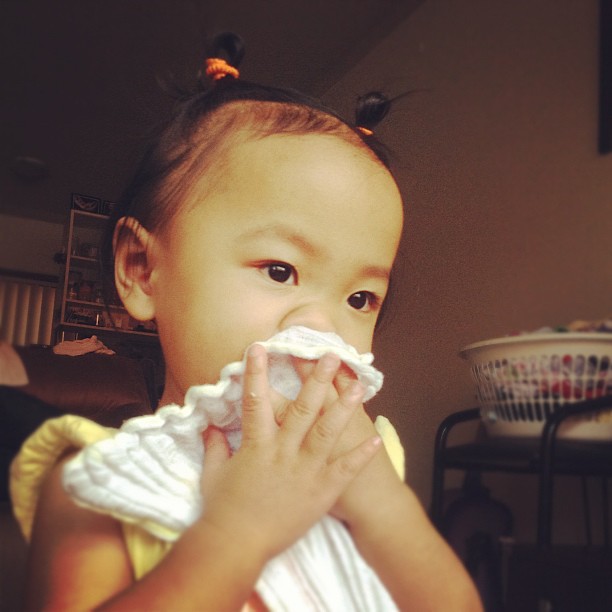
*Image of girl with runny nose by penreyes on Flickr.