When Do Babies Start Teething? 7 Important Things Every Parent Should Expect
If you’re wondering when do babies start teething, you’re not alone. Teething is one of the most talked-about milestones in a baby’s first year — and also one of the most misunderstood. Many parents aren’t sure what’s normal, what to expect, or when to call their pediatrician.
Here’s a clear, honest guide to help you navigate this stage with confidence.
When Do Babies Start Teething?
Most babies start teething between 4 and 7 months of age, though every baby is different. Some babies get their first tooth as early as 3 months, while others don’t see one until after their first birthday — and both are completely normal.
The first teeth to appear are usually the bottom front teeth, followed by the top front teeth a few weeks later.
Understanding when do babies start teething can help you recognize the signs early and respond with confidence instead of worry.
1. Teething Starts Before You See a Tooth
One of the most surprising things about teething is that symptoms can begin weeks before a tooth actually appears. Many parents don’t realize their baby is teething because there’s nothing visible yet.
Your baby’s gums are working hard beneath the surface — and that process can cause real discomfort even when you can’t see any signs of a tooth breaking through.
2. Drooling Is One of the First Signs
Excessive drooling is often the earliest sign that teething has begun. You may notice your baby soaking through bibs faster than usual or developing a mild rash around their mouth and chin from the moisture.
This is completely normal and doesn’t require treatment beyond keeping the area clean and dry.
3. Fussiness and Irritability Are Common
Teething can be uncomfortable, and babies have no other way to communicate that discomfort except through crying and fussiness. You may notice your baby is harder to soothe than usual, especially in the evenings.
According to Stanford Medicine Children’s Health, teething discomfort tends to peak just before a tooth breaks through the gum and improves once it emerges.
This too shall pass — most babies feel better once the tooth is fully through.
4. Biting and Chewing Are Normal Teething Behaviors
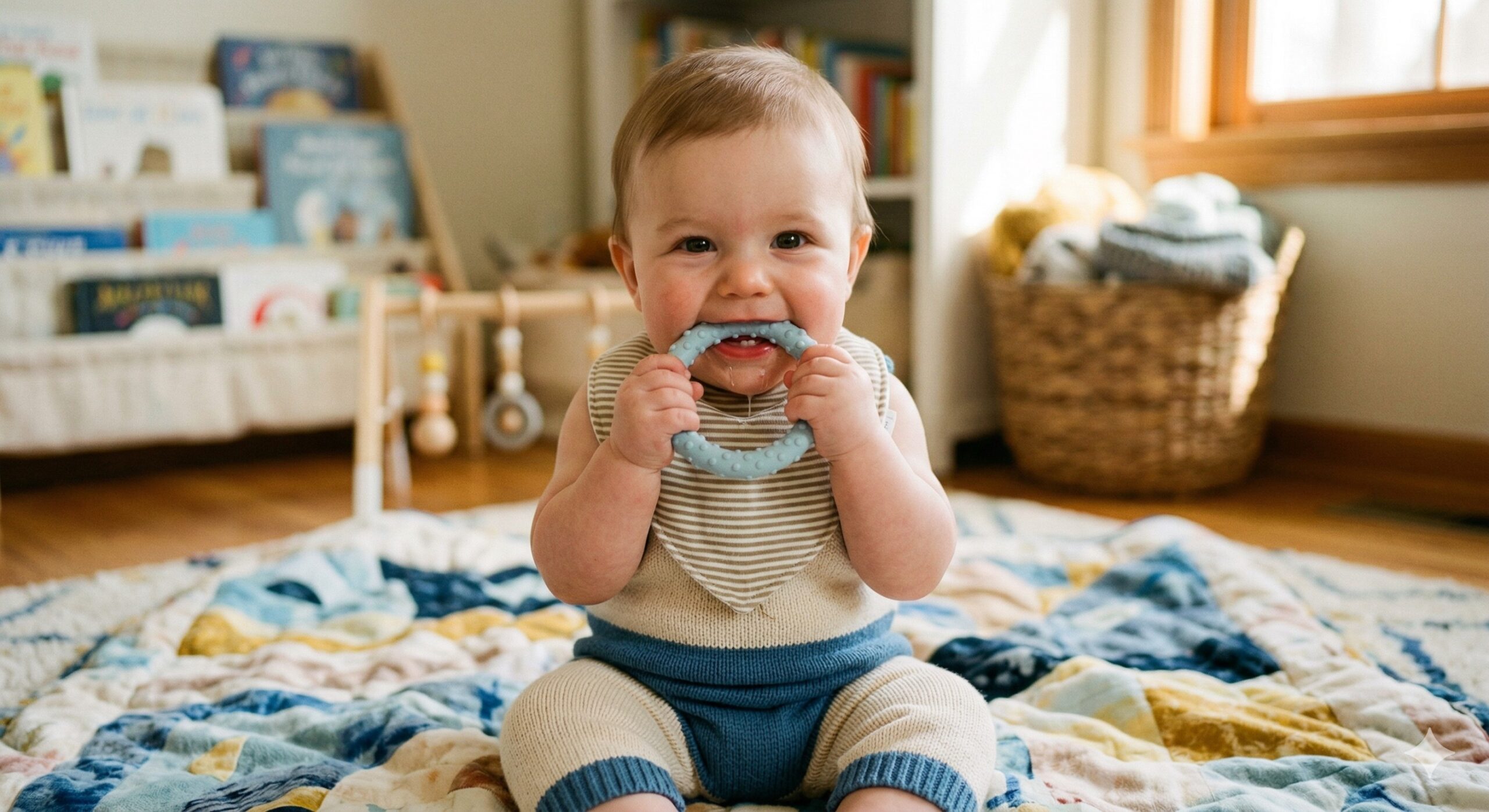
If your baby is suddenly chewing on everything in sight — toys, fingers, your shoulder — it’s a classic sign of teething. The counter-pressure from chewing helps relieve the pressure building under the gums.
Safe teething rings or chilled — not frozen — teething toys can offer real relief. Always supervise your baby with any teething toy and check regularly for wear or damage.
5. Teething Does Not Cause Fever
This is one of the most common myths about teething. While teething can cause a very slight rise in body temperature, it does not cause a true fever.
If your baby has a temperature of 100.4°F (38°C) or higher, that is not from teething — it is a sign of illness and should be evaluated by your pediatrician. Never assume a fever is just teething without ruling out other causes.
6. Sleep Disruptions Are Temporary
Many parents find that teething affects their baby’s sleep — more night wakings, difficulty settling, and shorter naps are all common during active teething periods.
The good news is that this is temporary. Once the tooth breaks through, sleep usually returns to normal within a few days. Staying consistent with your baby’s bedtime routine during this time can help.
7. Some Babies Teethe With Very Few Symptoms
Not every baby suffers through teething. Some babies pop teeth with very little fussiness or discomfort — and you only notice because you spot a new tooth while brushing or during a feeding.
If your baby seems perfectly fine, that’s wonderful. Every baby experiences teething differently, and an easy teething journey is nothing to worry about.
When to Talk to Your Pediatrician
Most teething is completely manageable at home. However, consider reaching out to your pediatrician if your baby:
- Has a fever of 100.4°F or higher
- Has diarrhea, vomiting, or a significant rash
- Seems to be in severe or inconsolable pain
- Has no teeth by 18 months of age
At Canopy Pediatrics, we help families navigate every milestone — from the first tooth to the first day of school — with expert guidance and genuine care.
The Bottom Line: When Do Babies Start Teething?
Most babies start teething between 4 and 7 months, but every baby moves at their own pace. Knowing when do babies start teething and what to expect can make this stage feel much less overwhelming.
Trust your instincts, watch your baby’s cues, and remember — this phase is temporary.
If you have questions about your baby’s teething or development, join our practice and book a visit today — in-office or virtually, whatever works best for your family.