Sun Safety for Kids: 6 Essential Tips Every Tallahassee Parent Needs This Summer
If you’re a parent in Tallahassee, you already know that Florida summers are no joke. Sun safety for kids is one of the most important topics this time of year — and one that catches many families off guard when the heat and humidity arrive faster than expected.
The good news is that protecting your child from the sun doesn’t have to be complicated. With a few simple habits in place before summer begins, you can keep your child safe, comfortable, and healthy all season long.
Here are 6 essential tips every Tallahassee parent needs to know about sun safety for kids this summer.
Why Sun Safety for Kids Matters More in Florida
Florida’s sun is more intense than most parents realize — even on cloudy days. Tallahassee’s combination of high temperatures, strong UV rays, and humidity creates conditions where children can overheat or sunburn faster than in other parts of the country.
Children are particularly vulnerable because their skin is thinner and more sensitive than adult skin, and their bodies are less efficient at regulating temperature through sweating. Understanding sun safety for kids before summer peaks is one of the most proactive things a Tallahassee parent can do.
1. Apply Sunscreen Every Single Time — Even on Cloudy Days
The most fundamental rule of sun safety for kids is consistent sunscreen use — not just on beach days or pool days, but every time your child goes outside.
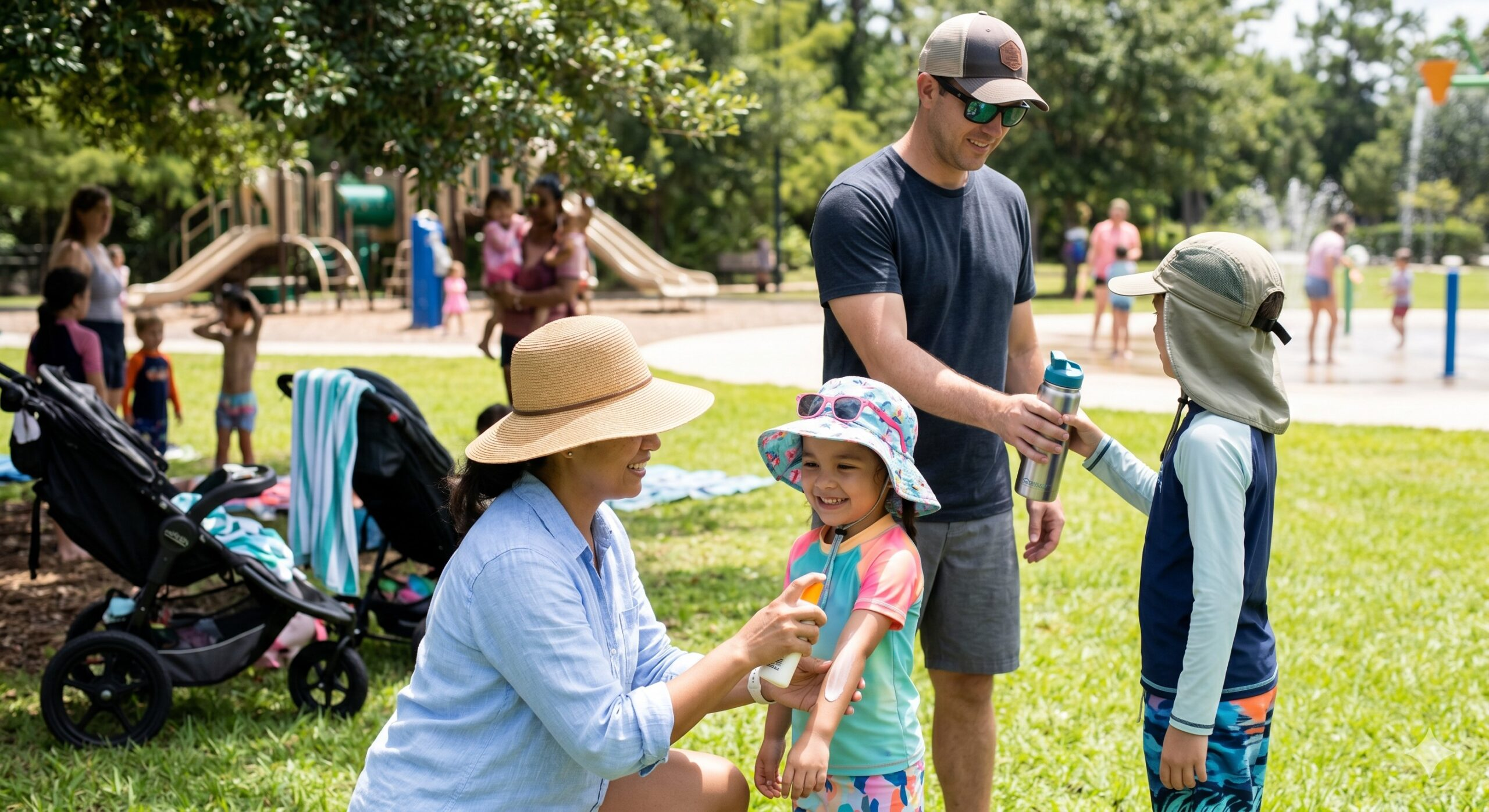
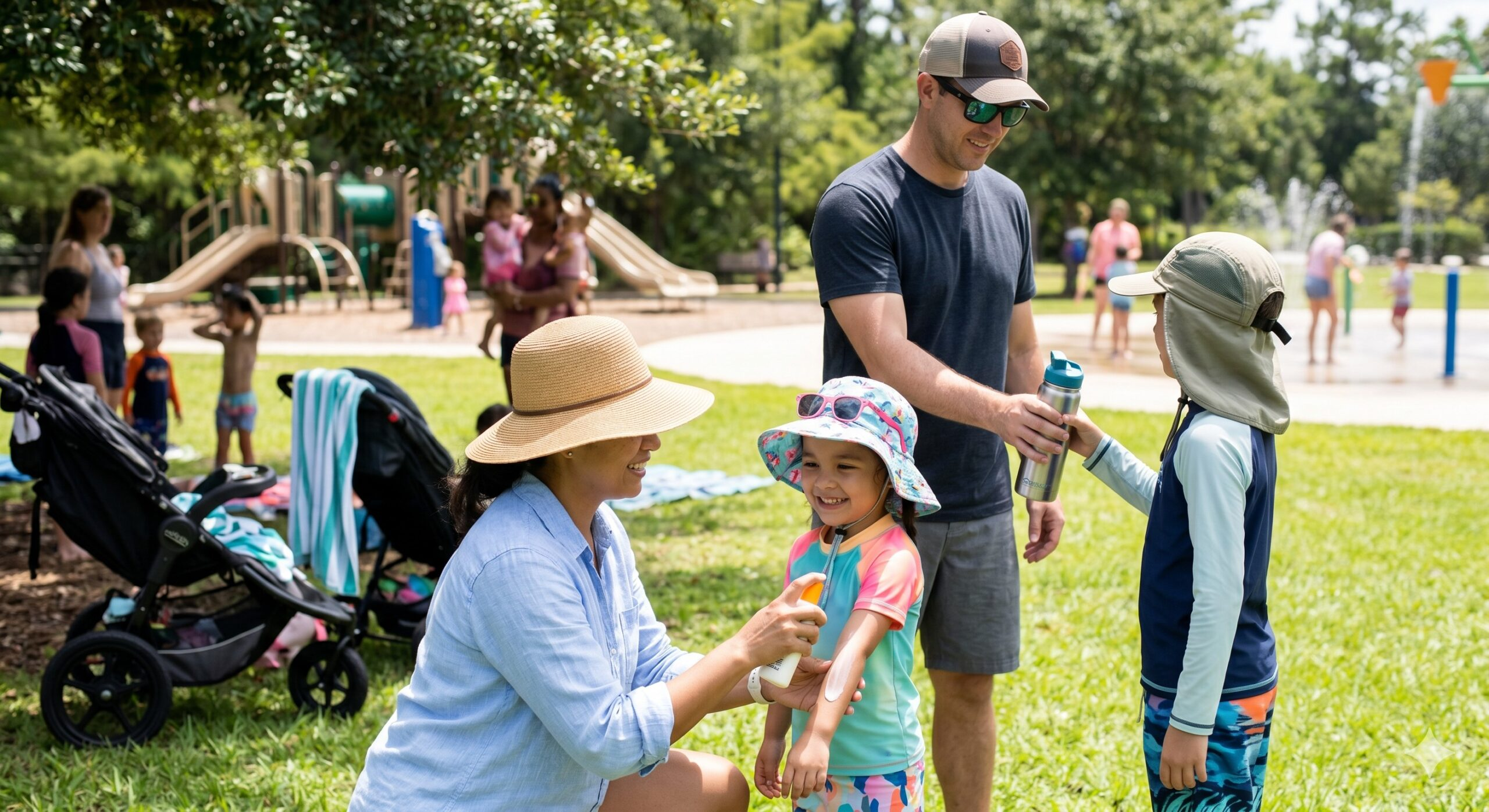
Choose a broad-spectrum sunscreen with at least SPF 30 that protects against both UVA and UVB rays. Apply it 15 to 30 minutes before going outside and reapply every two hours — or immediately after swimming or heavy sweating.
One important note for Tallahassee parents with babies under six months: sunscreen is not recommended for the whole body at this age. Keep infants in the shade, dress them in lightweight clothing, and use a wide-brimmed hat. Sunscreen can be applied to small exposed areas like hands and face when shade isn’t available.
2. Time Outdoor Activities Around the Sun’s Peak Hours
In Tallahassee’s summer heat, timing matters as much as sunscreen. UV rays are strongest between 10 a.m. and 4 p.m. — and this is when the risk of sunburn and heat-related illness is highest for children.
Whenever possible, plan outdoor activities for early morning or late afternoon. If your child has sports practice, a playground playdate, or outdoor summer camp activities during peak hours, make sure they have shade access, adequate sunscreen, and plenty of water.
According to Stanford Medicine Children’s Health, limiting sun exposure during peak UV hours is one of the most effective strategies for protecting children’s skin long term.
3. Dress Your Child for the Heat — Not Just for Comfort
What your child wears outdoors in Tallahassee’s summer sun makes a significant difference in how well their body handles the heat.
Choose lightweight, light-colored, breathable fabrics like cotton that allow air to circulate. When possible, opt for clothing with a UPF rating — ultraviolet protection factor — which provides an added layer of defense against harmful rays beyond sunscreen alone.
Don’t forget:
- A wide-brimmed hat that shades the face, neck, and ears
- Sunglasses with UV protection to protect developing eyes
- Rash guards for pool or water play days
These simple additions to your child’s summer wardrobe go a long way in keeping sun safety for kids consistent even when you’re focused on everything else.
4. Hydration Is Non-Negotiable in Florida’s Heat
Tallahassee summers are not just hot — they’re humid. That combination accelerates dehydration in children faster than dry heat alone, and many kids don’t recognize or communicate thirst until they’re already mildly dehydrated.
Make it a habit to offer water before, during, and after any outdoor activity — not just when your child asks for it. For toddlers and young children, small frequent sips throughout the day are more effective than large amounts all at once.
Signs of dehydration to watch for include dry lips, decreased urination, unusual fatigue, and irritability. If your child seems suddenly cranky or lethargic after time in the heat, offer water and move them to a cool environment immediately.
5. Never Leave a Child in a Parked Car
This is one of the most critical sun safety reminders for Tallahassee parents every summer — and one that bears repeating every single year.
In Florida’s summer heat, the interior of a parked car can reach dangerously high temperatures within minutes — even with the windows cracked and even when parked in the shade. Children’s bodies heat up three to five times faster than adults, making even a brief time in a hot car potentially life-threatening.
Always take your child with you when leaving the car, no matter how quick the errand seems. If you ever see a child alone in a hot vehicle, call 911 immediately.
6. Know the Signs of Heat Exhaustion in Children
Even with all the right precautions in place, heat-related illness can still happen — especially during Tallahassee’s most intense summer weeks. Knowing how to recognize the early signs of heat exhaustion can make a critical difference.
Watch for these warning signs in your child:
- Heavy sweating or skin that feels hot and dry
- Pale or flushed skin
- Dizziness, weakness, or unusual fatigue
- Nausea or vomiting
- Rapid heartbeat
- Confusion or disorientation
If you notice any of these signs, move your child to a cool area immediately, offer sips of water, and apply cool damp cloths to their skin. If symptoms do not improve quickly or worsen, seek medical attention right away.
When to Talk to Your Pediatrician
Most sun and heat-related concerns can be prevented with the tips above. However, reach out to your pediatrician if your child:
- Has a severe sunburn with blistering or significant pain
- Shows signs of heat exhaustion that don’t improve with rest and hydration
- Has a history of heat sensitivity or takes medications that increase sun sensitivity
- Is an infant under three months with any fever in summer heat
At Canopy Pediatrics, we help Tallahassee families stay ahead of seasonal health concerns — so summer is filled with fun, not worry. Whether you need guidance on sun protection for your newborn or have questions about heat safety for your toddler, we’re here for you.
The Bottom Line: Sun Safety for Kids This Summer
Sun safety for kids in Tallahassee is not optional — it’s one of the most important things you can do for your child’s health and comfort this season. Consistent sunscreen, smart timing, proper hydration, and knowing the signs of heat illness are all habits that take just a little planning but make an enormous difference.
Start these habits now, before the heat peaks, and your family will be ready for a safe and wonderful Tallahassee summer.
If you have questions about keeping your child safe this summer, join our practice and book a visit today — in-office or virtually, whatever works best for your Tallahassee family.