Water Safety for Babies: 6 Important Rules Every Tallahassee Family Should Follow
Summer in Tallahassee means pools, sprinklers, lakes, and water play — and for parents of babies and toddlers, it also means one of the most important conversations of the season. Water safety for babies is not just a summer checklist item. In Florida, it is a year-round life-saving priority.
The statistics are sobering. Drowning is the leading cause of unintentional death to children ages 1 to 4 in Florida — and the heartbreaking reality is that most of these tragedies are entirely preventable.
Here are 6 important rules every Tallahassee family should know and follow to keep their babies and toddlers safe around water this summer.
Why Water Safety for Babies Matters So Much in Tallahassee
Florida’s geography makes water safety for babies uniquely critical compared to most other states. Tallahassee families live surrounded by pools, ponds, lakes, and waterways — and access to water is simply part of everyday life here.
What most parents don’t realize is how fast a water emergency can develop. We’re talking seconds — not minutes. A quick phone call, turning to grab a towel, or a brief conversation with another parent is all it takes. For babies and toddlers, who are naturally curious, move quickly, and have no understanding of danger, that window is even smaller.
The good news is that with the right knowledge and consistent habits, every Tallahassee family can enjoy a safe and wonderful summer around water.
1. Drowning Can Happen in Just a Few Inches of Water
This is the fact that surprises most parents — and the most important one to know. Water safety for babies doesn’t only apply to pools, lakes, or the beach.
Babies and young toddlers can drown in surprisingly small amounts of water — bathtubs, buckets, coolers, water tables, and even puddles all pose a real risk. It doesn’t take a pool to create a dangerous situation.
Never leave a baby or toddler unattended near any standing water — even for a few seconds. A distraction that feels momentary can be life-changing.
2. Supervision Means Eyes On — Every Single Second
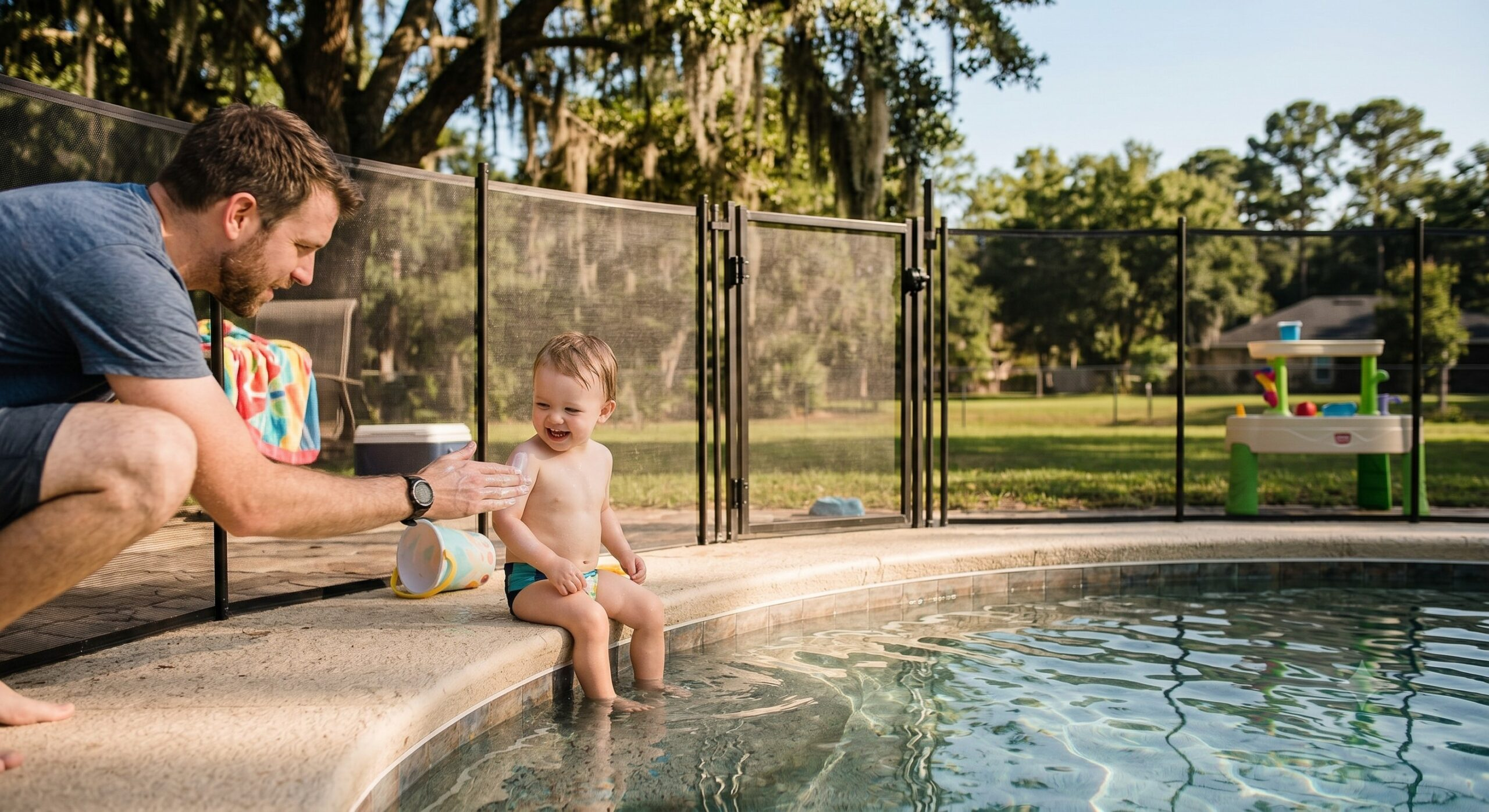
Active supervision is the single most important rule of water safety for babies — and it means more than being nearby. It means having your eyes on your child every single second they are in or near water.
The best approach is to designate a Water Watcher — one adult whose only job is to watch the children in the water, without checking their phone, having a conversation, or looking away for any reason.
In busy Tallahassee pool gatherings and family water days, it’s easy for everyone to assume someone else is watching. That assumption is dangerous. Always designate one specific adult as the Water Watcher before anyone enters the water.
3. Pool Barriers Are Non-Negotiable
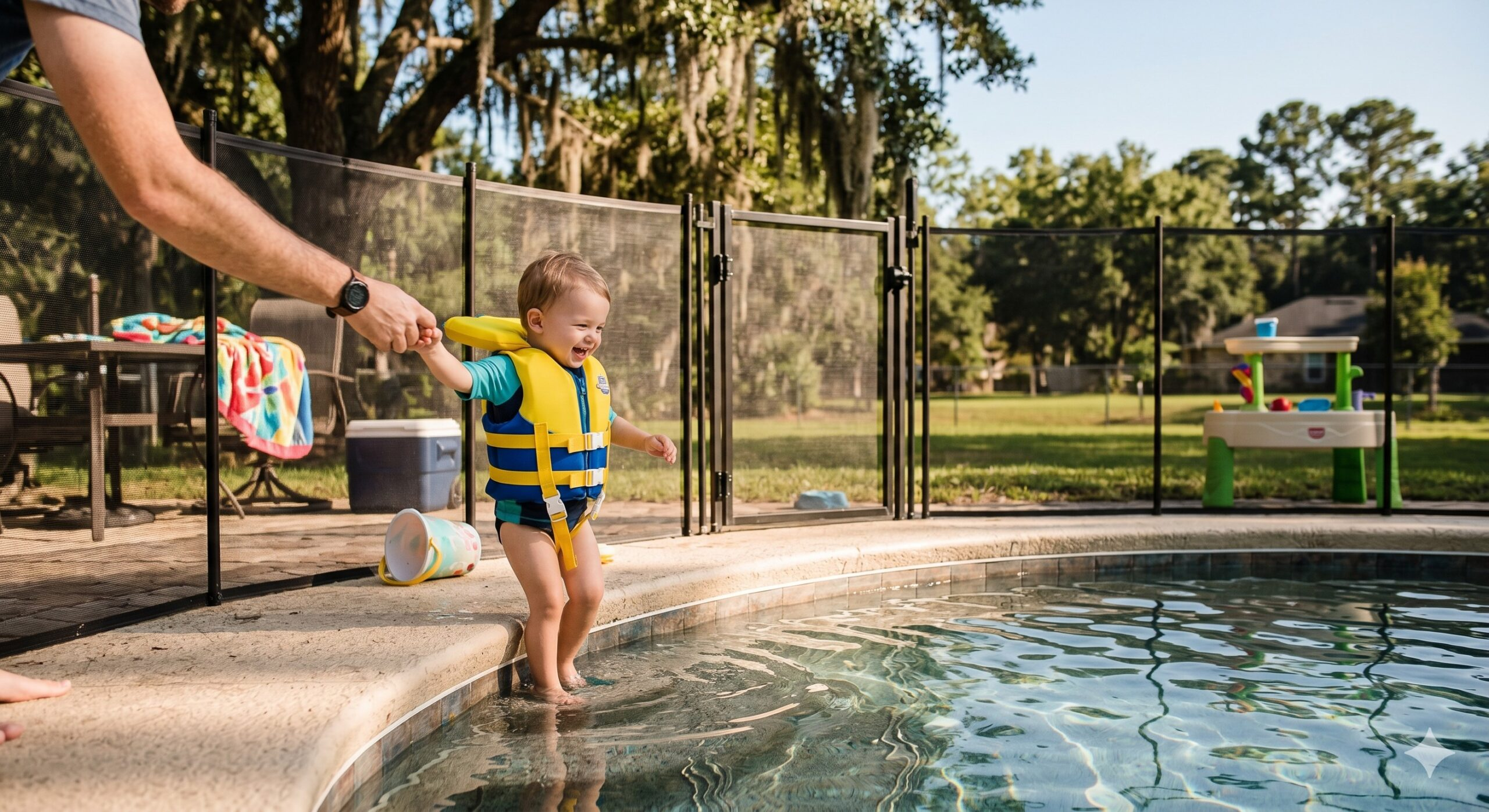
If your Tallahassee home has a pool — or if you visit homes with pools — proper barriers are one of the most critical layers of water safety for babies and toddlers.
A four-sided fence with a self-closing, self-latching gate that separates the pool from the house and yard dramatically reduces the risk of unsupervised access. This single measure has been shown to prevent a significant number of childhood drownings every year.
Additional layers to consider:
- Pool alarms that sound when the water surface is disturbed
- Door alarms on any house door that leads to the pool
- Safety covers when the pool is not in use
- Always removing floats and toys from the pool after use — they attract curious toddlers
4. Puddle Jumpers and Water Wings Are Not Safety Devices
This surprises many Tallahassee parents — and it is one of the most important water safety facts to share. Puddle jumpers, water wings, and inflatable swim aids are not approved flotation devices and should never be used as a substitute for supervision or a proper life jacket.
These devices position children vertically in the water — which is actually the drowning position. They also give parents and children a false sense of security that can lead to reduced supervision, which is exactly when accidents happen.
For open water, boating, or any situation where flotation is needed, always use a properly fitted U.S. Coast Guard-approved life jacket — not an inflatable toy. A real life jacket keeps a child’s face above water even if they lose consciousness.
5. Swim Lessons Are the Most Powerful Investment You Can Make
One of the most effective tools for water safety for babies and toddlers is swim lessons — and they can start earlier than most parents think.
Self-rescue swim lessons can begin as young as six months of age for babies who can sit up independently. These lessons focus on teaching babies and toddlers how to float on their backs and move toward safety — skills that can be life-saving in an emergency.
Florida has recently expanded access to swim lessons for families who need financial support, with vouchers available for eligible families with young children. If cost has been a barrier, now is a great time to look into what programs are available in the Tallahassee area for your family.
6. Know CPR — Every Tallahassee Parent Should
Even with every precaution in place, knowing infant and child CPR is an essential part of water safety for babies. In an emergency, knowing what to do in those first critical minutes can make all the difference before help arrives.
Many hospitals, fire stations, and community centers in Tallahassee offer CPR certification courses for parents. If you have a baby or toddler at home and don’t yet know CPR — learning it this summer is one of the most important things you can do for your family.
Drowning is silent and fast. Your actions in those first moments matter most.
When to Talk to Your Pediatrician About Water Safety
Your pediatrician is a great resource for personalized water safety guidance. Consider bringing it up at your next well-child visit if you want to discuss:
- When to start swim lessons for your baby or toddler
- How to choose the right life jacket for your child’s size and age
- Signs of dry drowning or secondary drowning to watch for after water play
- Local swim lesson resources available in Tallahassee
At Canopy Pediatrics, we help Tallahassee families navigate every season safely — including the water-filled months of summer. Keeping your child safe around water is something we care deeply about, and we’re always here to answer your questions.
The Bottom Line: Water Safety for Babies This Tallahassee Summer
Water safety for babies is the most important summer topic for Tallahassee families with young children. Drowning is fast, silent, and preventable — and every layer of protection you put in place matters.
Supervise constantly. Fence your pool. Enroll in swim lessons. Learn CPR. And remember that no flotation toy replaces active, eyes-on supervision every single second.
If you have questions about water safety or your child’s development, join our practice and book a visit today — in-office or virtually, whatever works best for your Tallahassee family.