First Foods for Babies: 6 Powerful Tips to Make Mealtime Easy and Fun
If the idea of starting solid foods feels overwhelming, you’re not alone. First foods for babies is one of the topics that generates the most anxiety among new parents — and also one of the areas where there is the most conflicting advice online.
The truth is that starting solids doesn’t have to be complicated. With the right guidance and a relaxed mindset, mealtime can be an enjoyable milestone for both you and your baby.
Here are 6 powerful tips to help you start first foods for babies with confidence and without the stress.
When Are Babies Ready for First Foods?
Before diving into the tips, it’s important to know when your baby is actually ready. Most babies are developmentally ready for first foods between 4 and 6 months of age — but readiness isn’t just about age.
Look for these signs that your baby is ready to start solids:
- They can sit up with minimal support and hold their head steady
- They show interest in food — watching you eat, reaching toward your plate
- They have lost the tongue thrust reflex that pushes food out of the mouth
- They can move food to the back of their mouth and swallow
If you’re unsure whether your baby is ready, your pediatrician is the best person to guide that decision based on your baby’s individual development.
1. Start Simple — One Ingredient at a Time
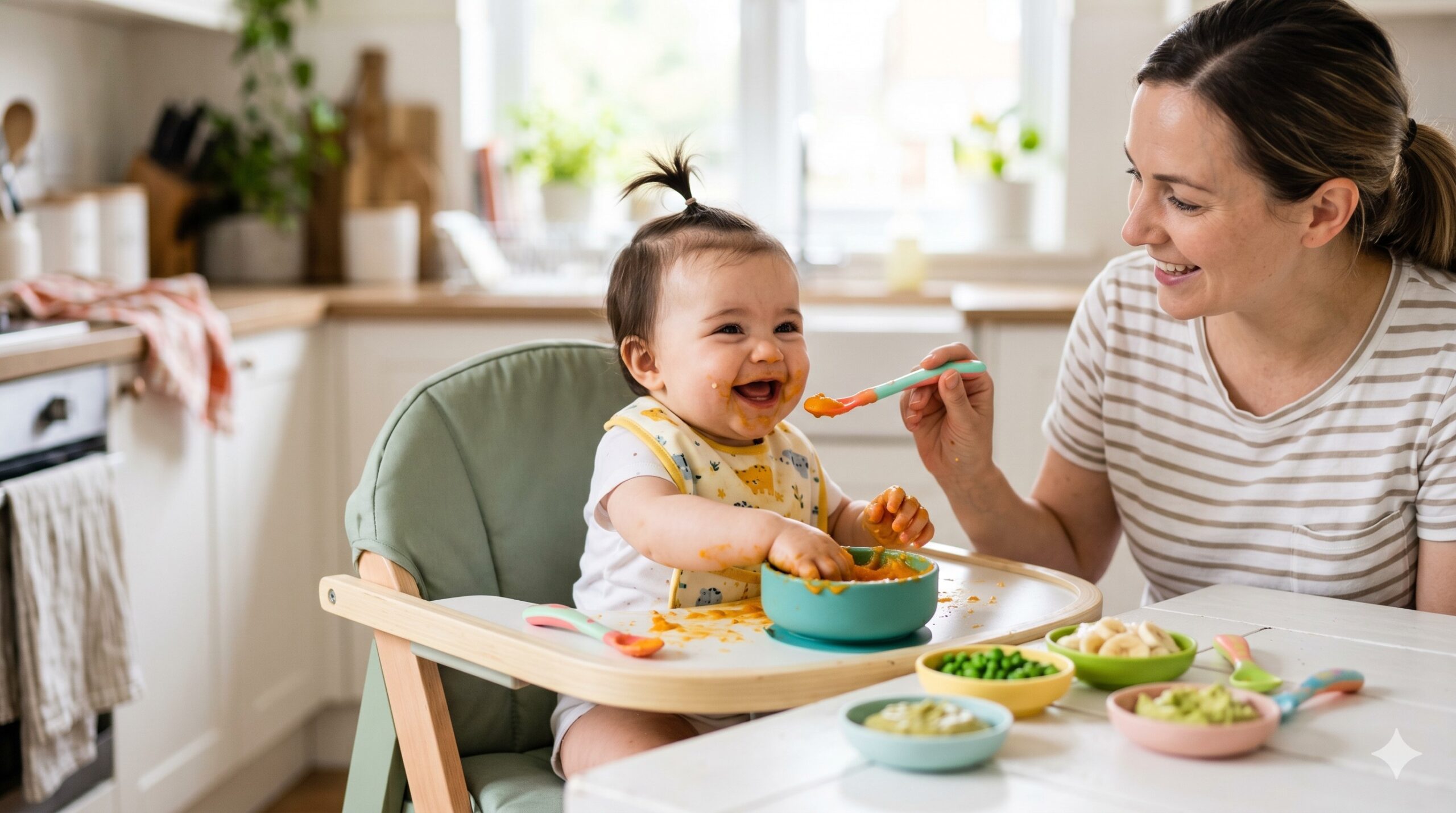
When it comes to first foods for babies, simple is always better. Single ingredient purees — like pureed sweet potato, avocado, banana, or peas — are the ideal starting point.
Introducing one new food at a time and waiting 3 to 5 days before introducing another allows you to identify any allergic reactions or sensitivities clearly. If your baby reacts to something, you’ll know exactly what caused it.
There’s no need for elaborate recipes or complicated combinations in the beginning. Your baby’s palate is brand new — even the simplest flavors are exciting and interesting to them.
2. Don’t Stress About the Amount
One of the most common sources of anxiety around first foods for babies is how much — or how little — your baby actually eats. In the early weeks of starting solids, the amount doesn’t matter at all.
At this stage, the goal is exploration — not nutrition. Breast milk or formula remains your baby’s primary source of nutrition until around 12 months. Solids are simply an introduction to textures, flavors, and the experience of eating.
Some days your baby will eagerly eat several spoonfuls. Other days they’ll refuse everything you offer. Both are completely normal and neither is cause for concern.
3. Introduce Allergens Early and Confidently
Current pediatric guidelines recommend introducing common allergens — including peanuts, eggs, and tree nuts — early and regularly, rather than avoiding them.
According to Stanford Medicine Children’s Health, early introduction of allergenic foods significantly reduces the risk of developing food allergies later in childhood. This is one of the most important and powerful shifts in pediatric nutrition guidance in recent years.
Talk to your pediatrician about the best way to introduce allergens based on your baby’s individual health history and any family history of food allergies.
4. Make Mealtime a Positive Experience
The atmosphere around mealtime matters just as much as the food itself. Babies pick up on parental stress and anxiety — if you’re tense about whether they’ll eat, they’ll sense it.
Try to approach first foods for babies with curiosity and playfulness rather than pressure. Let your baby touch, smell, and explore their food. Expect mess. Celebrate small wins. Laugh when things go sideways.
The goal in these early months is to help your baby develop a positive relationship with food — and that foundation starts at the very first meal.
5. Follow Your Baby’s Lead
Your baby is a remarkably good communicator — even without words. When they lean forward, open their mouth, and reach for the spoon, they’re telling you they want more. When they turn away, clamp their mouth shut, or start fussing, they’re telling you they’re done.
Respecting those cues is one of the most powerful things you can do during the first foods for babies stage. Pressuring a baby to eat more than they want — even with gentle encouragement — can create negative associations with mealtime that are hard to undo.
Trust your baby. They know when they’re hungry and when they’re full.
6. You Don’t Have to Make Everything From Scratch
There is a persistent myth among new parents that good first foods for babies must be homemade. The reality is that store-bought baby food can be just as nutritious as homemade — as long as you choose options with simple, clean ingredients and no added sugar or salt.
Single ingredient pouches and jarred purees are perfectly fine options, especially on busy days. What matters most is variety, consistency, and a relaxed approach — not whether you made it yourself.
Do what works for your family. There is no medal for making everything from scratch, and your baby won’t know the difference.
When to Talk to Your Pediatrician
Starting solids is an exciting milestone, but it’s also a good time to check in with your pediatrician. Reach out if your baby:
- Shows signs of an allergic reaction after trying a new food — rash, hives, vomiting, or difficulty breathing
- Consistently gags or chokes on pureed foods
- Shows no interest in solids by 7 months of age
- Has difficulty swallowing or seems to be in discomfort during feeding
At Canopy Pediatrics, we guide families through every milestone — including the messy, exciting, sometimes confusing world of starting solids — with practical advice and genuine support.
The Bottom Line: First Foods for Babies
First foods for babies is a milestone to enjoy, not a test to pass. Start simple, follow your baby’s lead, and remember that the goal right now is exploration — not perfection.
Every baby moves at their own pace, and every mealtime is a learning experience — for your baby and for you.
If you have questions about starting solids or your baby’s nutrition, join our practice and book a visit today — in-office or virtually, whatever works best for your family.