
Outdoor Play for Child Development: 5 Essential Reasons to Get Kids Outside
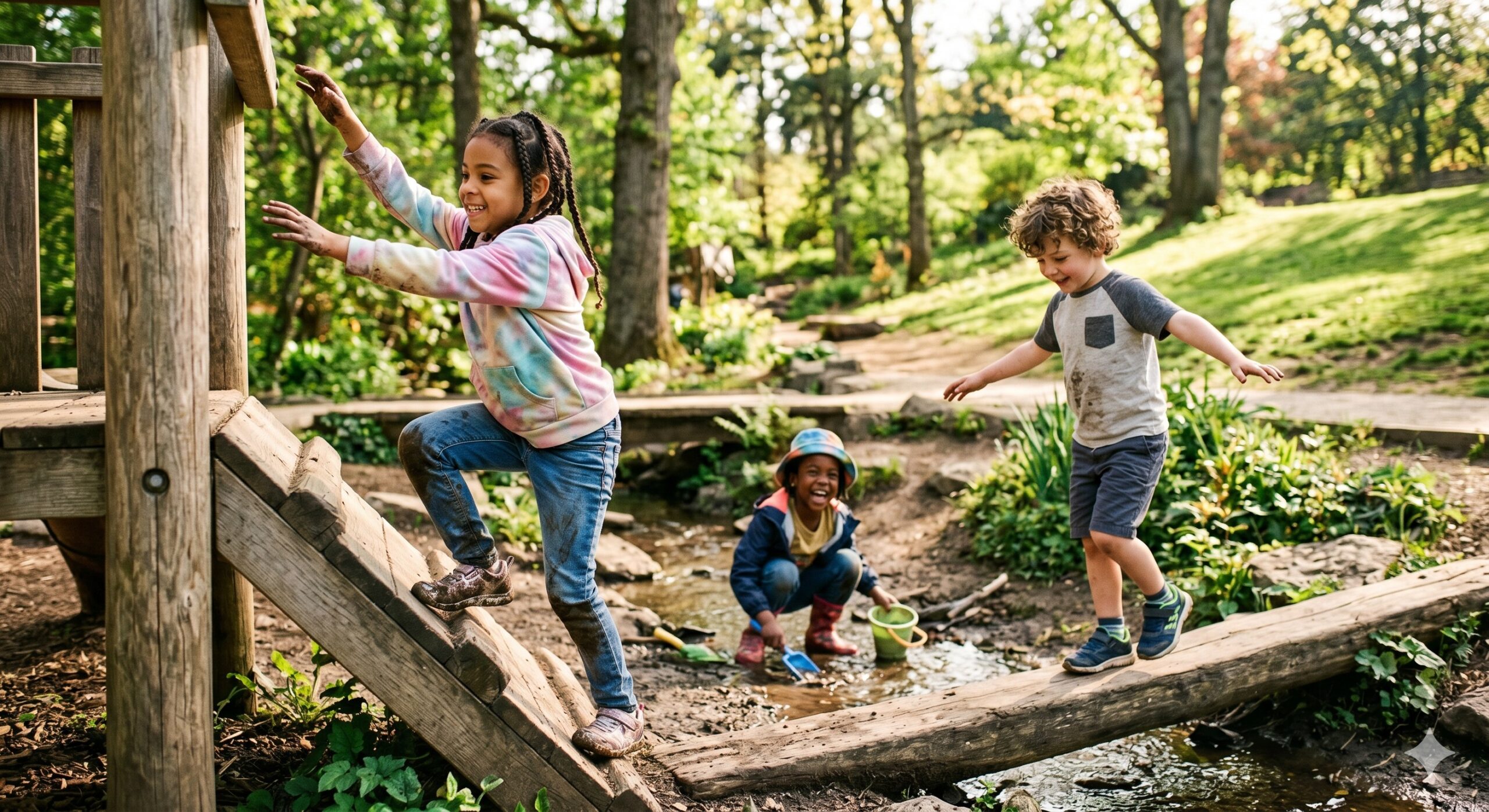
If you’ve ever felt guilty about screen time or wondered whether your child is getting enough physical activity, the answer might be simpler than you think. Outdoor play for child development is one of the most powerful and underrated tools available to every parent — and it costs nothing.
Research consistently shows that time spent outside does far more than burn energy. It shapes the way children think, feel, move, and connect with the world around them.
**And even though social media would have you believe otherwise, playing outside in the front yard is now more dangerous now than in the past – it’s actually safer!
Here’s why getting your child outside every day is one of the best things you can do for their development.
What Does Outdoor Play for Child Development Actually Mean?
Outdoor play for child development isn’t just about running around in the backyard. It encompasses any unstructured or semi-structured activity that takes place outside — climbing, digging, splashing, exploring, observing nature, and simply moving freely in open space.
Unlike structured indoor activities, outdoor play allows children to set their own pace, follow their own curiosity, and engage with an environment that is constantly changing and unpredictable. That unpredictability is exactly what makes it so valuable.
Understanding the full impact of outdoor play for child development can help parents prioritize it even on busy days.
1. Outdoor Play Builds Strong Bodies and Healthy Brains
The most immediate benefit of outdoor play for child development is physical. Running, jumping, climbing, and balancing all strengthen muscles, improve coordination, and support healthy bone development in ways that indoor play simply cannot replicate.
But the benefits go deeper than the body. Physical activity outdoors increases blood flow to the brain, which directly supports focus, memory, and learning. Children who spend regular time outside tend to perform better academically and have longer attention spans in the classroom.
According to Stanford Medicine Children’s Health, regular physical activity during childhood is essential for healthy brain development and long-term cognitive function.
2. Nature Reduces Stress and Anxiety in Children
Children experience stress too — and outdoor play is one of the most effective natural remedies available.
Time spent in natural environments has been shown to lower cortisol levels, reduce symptoms of anxiety, and improve overall mood in children of all ages. Even a short period of unstructured outdoor time can reset a child’s emotional state after a difficult day at school or a frustrating afternoon at home.
For children who struggle with anxiety, sensory sensitivities, or attention difficulties, outdoor play for child development offers a calming, regulating environment that is difficult to replicate indoors.
3. Outdoor Play Develops Critical Social Skills
When children play outside together — especially in unstructured settings — they naturally practice some of the most important social skills they will use throughout their lives.
Negotiating rules, taking turns, resolving conflicts, leading, following, and reading social cues all happen organically during outdoor play in ways that structured classroom activities often cannot provide.
Children who have regular opportunities for free outdoor play with peers tend to develop stronger empathy, better communication skills, and greater emotional resilience. These are skills that no app or indoor activity can fully replace.
4. It Supports Sensory and Motor Development
The outdoor environment offers a richness of sensory experience that indoor spaces simply cannot match. Uneven ground, varying textures, wind, sunlight, water, and natural materials all challenge and stimulate a child’s developing sensory system in ways that are deeply beneficial.
For younger children especially, outdoor play for child development plays a critical role in building the sensory integration skills they need for reading, writing, and focused learning later on.
Climbing a tree, balancing on a log, or digging in the dirt might look like simple fun — but each of these activities is building neural pathways that support your child’s development in profound ways.
5. Time Outside Protects Children’s Eyesight
This is one of the most surprising benefits of outdoor play for child development — and one that many parents have never heard of.
Research has found that children who spend more time outdoors have significantly lower rates of myopia — nearsightedness — compared to children who spend most of their time inside. Exposure to natural light and the visual experience of focusing on objects at varying distances appears to play a protective role in healthy eye development.
With screen time at an all-time high among children, prioritizing outdoor play is one of the simplest and most effective ways to protect your child’s vision for the long term.
How Much Outdoor Play Does Your Child Need?
Pediatricians recommend that children get at least 60 minutes of moderate to vigorous physical activity every day — and as much of that as possible should happen outside.
For toddlers and preschoolers, even shorter bursts of outdoor time spread throughout the day add up and make a real difference. The goal isn’t perfection — it’s consistency.
Even on busy school days, a 20-minute outdoor play session after school can meaningfully support your child’s physical and emotional wellbeing.
When to Talk to Your Pediatrician
If your child consistently avoids outdoor play, seems unusually sedentary, or has physical limitations that make outdoor activity challenging, it’s worth a conversation with your pediatrician.
Consider reaching out if your child:
- Complains of pain or discomfort during physical activity
- Shows signs of anxiety or extreme reluctance around outdoor environments
- Has sensory sensitivities that make outdoor play difficult
- Seems significantly behind peers in motor development
At Canopy Pediatrics, we support the whole child — physical health, emotional wellbeing, and developmental milestones — at every stage of growth.
The Bottom Line: Outdoor Play for Child Development
Outdoor play for child development is not a luxury — it’s a necessity. From stronger bodies and healthier brains to better social skills and protected eyesight, the benefits of getting your child outside every day are profound and far-reaching.
You don’t need a perfect backyard or an elaborate plan. Just open the door and let them explore.
If you have questions about your child’s development or physical activity, join our practice and book a visit today — in-office or virtually, whatever works best for your family.