Underhydration in Kids: 5 Surprising Tallahassee Summer Tips Every Parent Needs
If your child has been unusually cranky, sluggish, or hard to manage this summer, the culprit might not be bad behavior or poor sleep. Underhydration in kids is one of the most common and most overlooked reasons children feel and act out during Tallahassee’s intense summer months.
And here’s the important distinction most parents don’t know: underhydration is not the same as clinical dehydration. It doesn’t require an emergency room visit — but it does affect your child’s mood, energy, focus, and behavior every single day.
Understanding underhydration in kids and how to prevent it is one of the most practical things a Tallahassee parent can do this summer.
What Is Underhydration in Kids — And How Is It Different From Dehydration?
Clinical dehydration is a medical condition with serious symptoms — no urination for 8+ hours, tearless crying, extreme lethargy — that requires prompt medical attention.
Underhydration in kids is what happens before that point. It’s when your child’s fluid levels drop below their optimal range — not enough to trigger a medical emergency, but enough to change how they feel and behave throughout the day.
Common signs of underhydration in kids include:
- Unexplained crankiness and mood swings
- Low energy or unusual fatigue
- Difficulty focusing or paying attention
- Mild headaches in older children
- Poor appetite
- General grumpiness that doesn’t improve with food or rest
Sound familiar? In Tallahassee’s summer heat, this is happening to children every single day — and most parents don’t connect the dots between their child’s behavior and their fluid intake.
Why Tallahassee Makes Underhydration in Kids Worse
Tallahassee summers are uniquely challenging for children’s hydration. With temperatures regularly climbing into the low to mid 90s and humidity that makes the heat feel even more extreme, the conditions for underhydration in kids are present from the moment they step outside.
Unlike adults, children’s bodies are less efficient at regulating temperature, less reliable at sensing thirst, and faster at losing fluids relative to their body size. That combination makes Tallahassee’s summer heat a perfect storm for underhydration — and why proactive hydration is so important for local families.
1. Their Bodies Lose Fluid Faster Than You Think
Children have a higher ratio of body surface area to body weight than adults — which means they absorb more environmental heat and lose more fluid through their skin much faster.
In Tallahassee’s summer heat and humidity, a child can move from optimal hydration to underhydration within 30 to 45 minutes of active outdoor play. That’s faster than most parents realize — and faster than most children would ever think to ask for water.
The solution is simple but requires consistency: offer water before going outside, every 20 minutes during outdoor activity, and immediately upon coming back inside — every single time.
2. Thirst Is Not a Reliable Signal in Young Children
One of the most important things to understand about underhydration in kids is that young children — especially toddlers and preschoolers — simply don’t have a reliable sense of thirst.
By the time your child tells you they’re thirsty, they are already underhydrated. Their fluid levels have already dipped below optimal, and the behavioral effects — crankiness, low energy, difficulty focusing — may already be underway.
According to Stanford Medicine Children’s Health, children’s thirst mechanisms are still developing, making it essential for parents and caregivers to offer fluids proactively rather than waiting for a child to ask.
This is especially critical for Tallahassee families during summer, when fluid loss is accelerated by heat and outdoor activity.
3. Children Don’t Sweat as Efficiently as Adults
Sweating is how the body cools itself — and children are less efficient at it than adults. Children produce less sweat per sweat gland, which means their bodies struggle to release heat effectively during outdoor activity.
As a result, their core body temperature rises faster — which accelerates fluid loss and increases the risk of underhydration in kids even during activities that don’t look particularly intense from the outside.
For Tallahassee children in summer sports, outdoor camps, or afternoon playground time, this inefficiency compounds quickly. Scheduled water breaks — not optional, not only when asked — are essential.
4. Popular Drinks Don’t Prevent Underhydration Effectively
Many parents reach for juice, sports drinks, or flavored beverages thinking they’re keeping their child hydrated. But these drinks are often high in sugar, which slows fluid absorption and can contribute to energy crashes and irritability — the exact symptoms you’re trying to prevent.
For most children in everyday situations, water is the most effective tool for preventing underhydration in kids. It absorbs quickly, supports optimal fluid balance, and doesn’t contribute to sugar spikes that leave children feeling worse.
For children engaged in prolonged intense physical activity lasting more than an hour, a low-sugar electrolyte drink may be appropriate — but always check with your pediatrician for guidance based on your child’s specific age and needs.
5. Underhydration Looks Like a Behavior Problem — Not a Hydration Problem
This is perhaps the most surprising truth about underhydration in kids — and the one that catches most Tallahassee parents off guard.
When a child is underhydrated, it doesn’t always look like thirst. It looks like:
- A tantrum over something small
- Refusing to eat lunch
- Crying without an obvious reason
- Being impossible to redirect or calm down
- Zoning out during activities they normally enjoy
Before assuming your child is overtired, overstimulated, or simply being difficult, offer water and a 10-minute cool-down indoors. You may be surprised how quickly their mood and energy shift when their fluid levels return to optimal.
Simple Daily Habits to Prevent Underhydration in Kids This Summer
Preventing underhydration is far easier than managing its effects. These habits work especially well for Tallahassee families during summer:
- Start every morning with water — before breakfast, before screens, before anything else
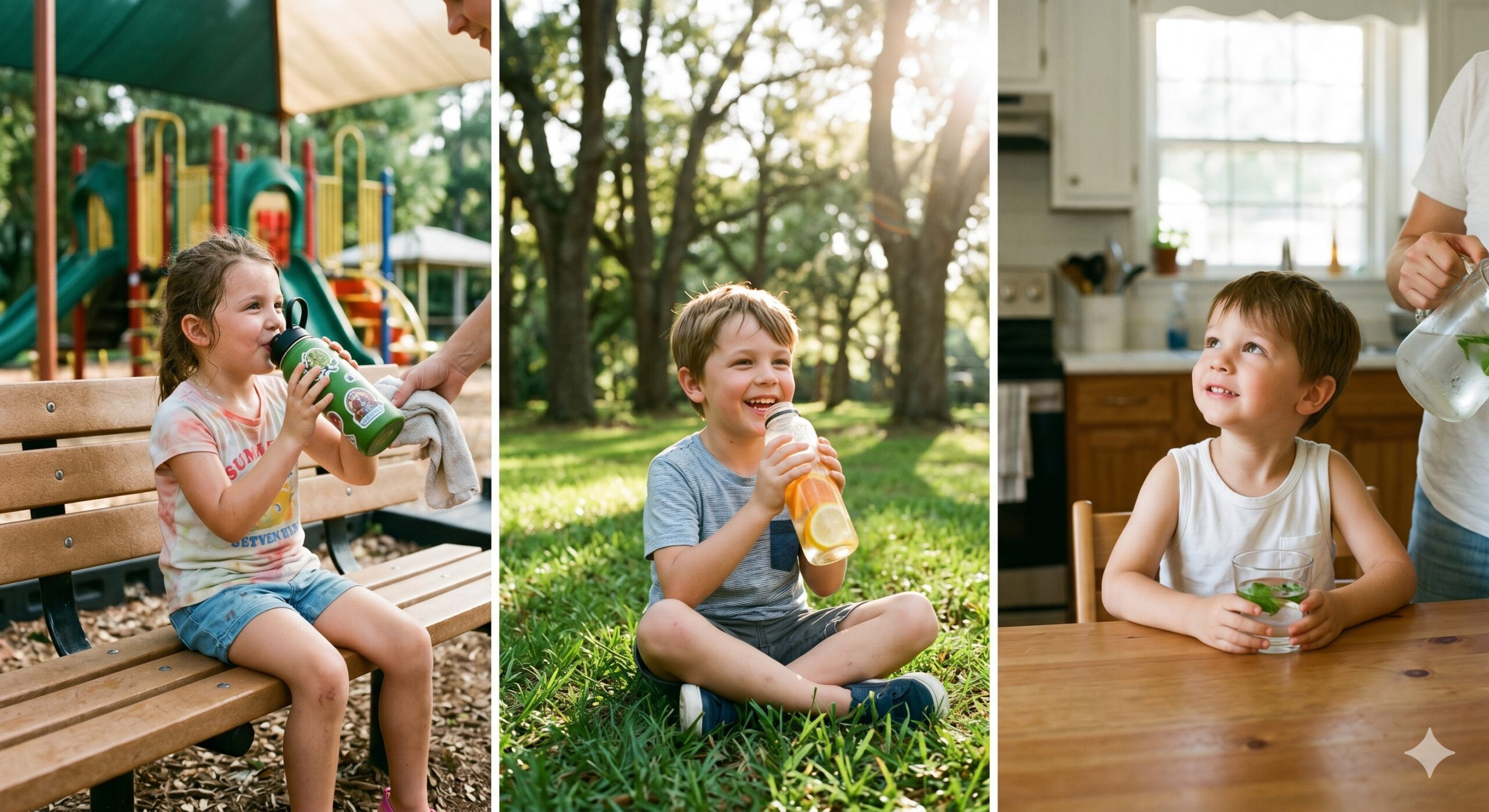
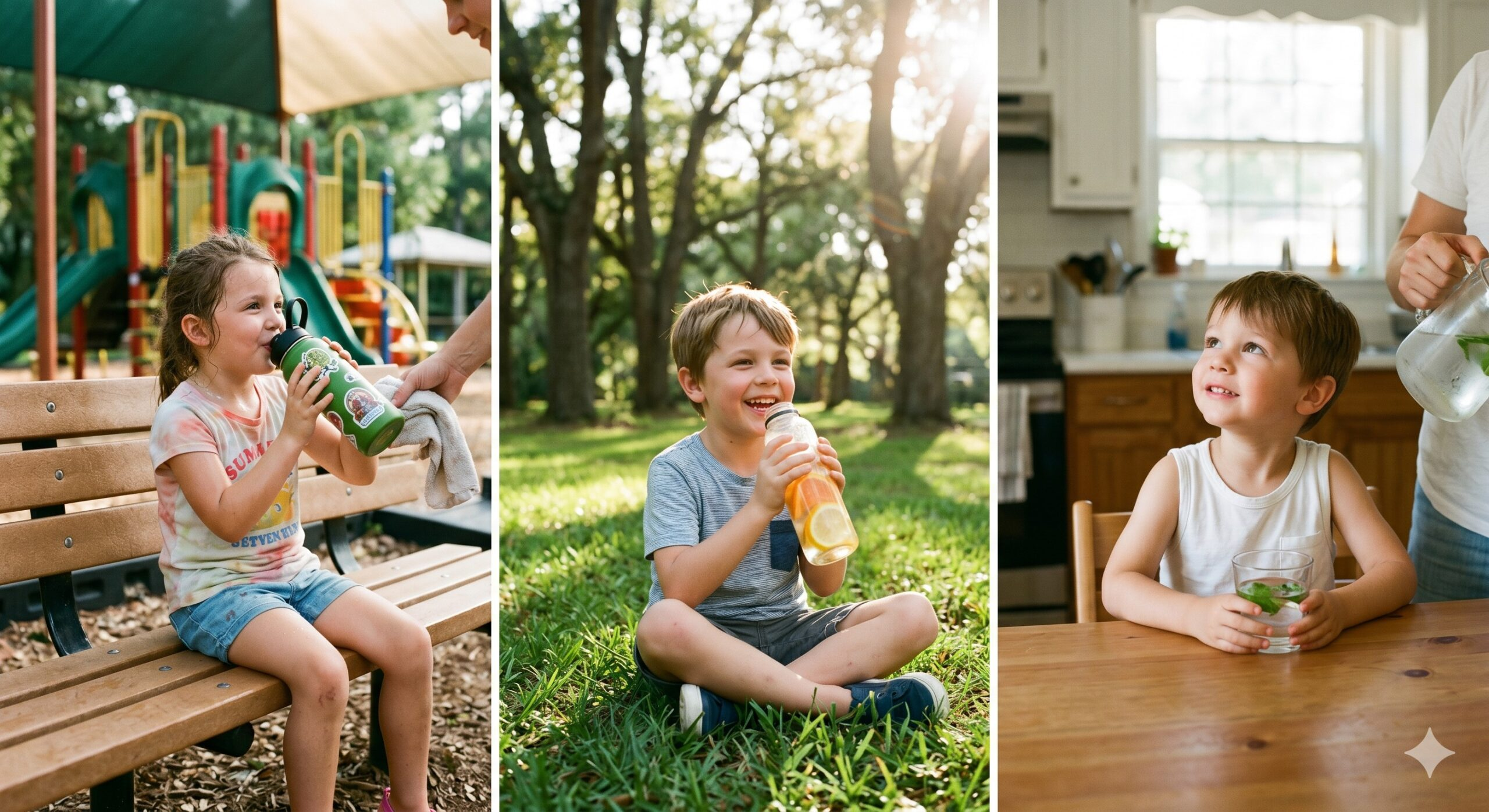
- Use a fun water bottle — children drink significantly more when they love their bottle
- Set hydration reminders — especially during outdoor activities
- Add fruit to water — strawberries, cucumbers, or citrus make water more appealing
- Offer water with every snack and meal — build it into every eating moment
- Watch behavior as a hydration signal — crankiness after outdoor time = offer water first
Underhydration vs. Clinical Dehydration — Know the Difference
| Underhydration | Clinical Dehydration |
| Crankiness and mood swings | No urination for 8+ hours |
| Low energy or fatigue | Tearless crying |
| Difficulty focusing | Sunken eyes |
| Poor appetite | Extremely dry mouth |
| Mild headache | Extreme lethargy |
| ➡️ Offer water and cool rest | ➡️ Call your pediatrician immediately |
When to Call Your Pediatrician
Most cases of underhydration in kids resolve quickly with consistent water intake and a cool environment. However, contact your pediatrician immediately if your child shows signs of clinical dehydration:
- Has not urinated in 8 or more hours
- Is an infant with a sunken fontanelle
- Is crying without producing tears
- Seems extremely lethargic or impossible to wake
- Has a fever alongside fluid loss symptoms
- Is vomiting and unable to keep any fluids down
At Canopy Pediatrics, we help Tallahassee families stay ahead of seasonal health concerns all summer long — including the everyday underhydration that makes kids cranky, tired, and hard to manage. You don’t have to figure it out alone.
The Bottom Line: Underhydration in Kids This Tallahassee Summer
Underhydration in kids is not a medical emergency — but it is a daily reality for many Tallahassee children during summer. It shows up as crankiness, fatigue, and behavioral changes long before any medical symptoms appear.
The fix is simple: offer water consistently, don’t wait for thirst, and learn to read your child’s behavior as a hydration signal. Keeping your child at their optimal fluid level is one of the easiest and most impactful things you can do for their mood, energy, and wellbeing this summer.
If you have questions about your child’s hydration or summer health, join our practice and book a visit today — in-office or virtually, whatever works best for your Tallahassee family.